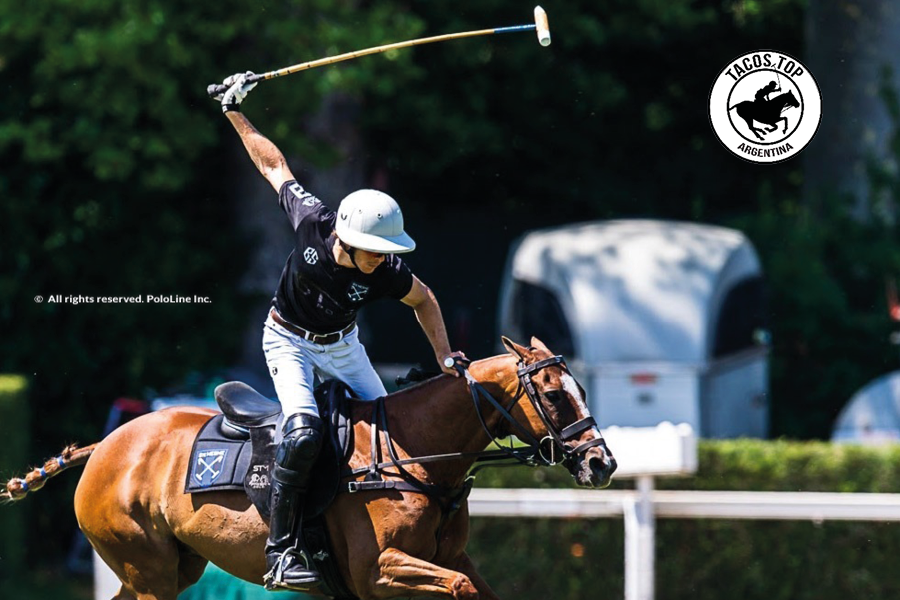
By Prof Eduardo Amaya, Sponsored by Top Tacos Argentina
They are two different roles that polo often confuses – and pays a high price for it. In the world of polo, there is a structural confusion that slows the growth of the sport, limits players, and diminishes team performance.
It is often believed that teaching polo and managing a polo team are the same thing. They are not, never were, and never will be.
Instructor and coach fulfill radically different functions, work on different levels, and respond to opposite objectives in terms of time.
THE POLO INSTRUCTOR
The architect of the player. The instructor works on a single unit: the player. Their work is quiet, deep, and cumulative.
They focus on biomechanics, perception, refined technique, and the intimate relationship between player and horse. They do not correct to win the next match; they correct so the player becomes better in the future.
What does an instructor develop?
Aspects related to polo riding:
- Correct position on the horse and how the player positions themselves.
- Sensitivity and shared latency with the horse.
- The player’s dynamic balance.
- Proper polo riding technique: correct use of stirrups, legs, and reins, among other elements.
- The hitting technique and its sequence.
- Individual game reading, perception of time and space.
The instructor builds abilities. They do not call plays, design game systems, or direct matches. Their perspective is microscopic.
THE POLO COACH OR TEAM COACH
The strategist of the team. The coach works on a different unit: the system. Four players, their roles, timing, and interactions.
The coach does not teach swing mechanics or hitting technique, nor how to hold or turn a horse. The coach starts from a clear premise: the player already possesses certain skills, and their task is to organize them as efficiently as possible within the collective game.
Just like the instructor, the coach must continue studying and expanding their knowledge. Being a coach implies understanding not only the strategic aspect of the game, but also managing the emotional state of players and the relationships among team members.
What does a coach organize?
- Positions and functions.
- Offensive and defensive systems.
- Attack–defense transitions.
- Strategic use of each player.
- Adjustments according to the opponent and the moment of the match.
- The coach optimizes what already exists.
- They do not focus on rebuilding or re-educating a player’s technical gesture.
Their perspective is panoramic, and their impact must be immediate. Two timelines, two responsibilities.
Here lies a key difference that polo often ignores:
The instructor works in the medium and long term.
The coach works in the short term.
Confusing the one who builds with the one who manages is one of the most costly mistakes in modern polo.
Another frequent mistake in polo is when the best player assumes three roles at once: player, instructor, and coach. This creates a serious problem – technical corrections are made within tactical contexts, and players are required to deliver solutions they do not yet possess. This confuses process with urgency.
No serious high-performance sport operates this way.
THE INSTRUCTOR DEVELOPS THE PLAYER.
THE COACH MAKES THE TEAM PERFORM.
Each must occupy their proper place.
In my opinion, polo needs to take an evolutionary step forward by professionalizing these roles.
Just as in other sports there are developers, trainers, and strategists, polo must recognize that:
Not everyone who plays well knows how to teach. Teaching is not for everyone; it is a gift that must be developed through study, perseverance, patience, and the ability to observe achievements over time.
Not every team improves by correcting technique in the middle of a play.
I believe the future of polo is not about doing more things, but about doing each thing better and at the exact right moment.